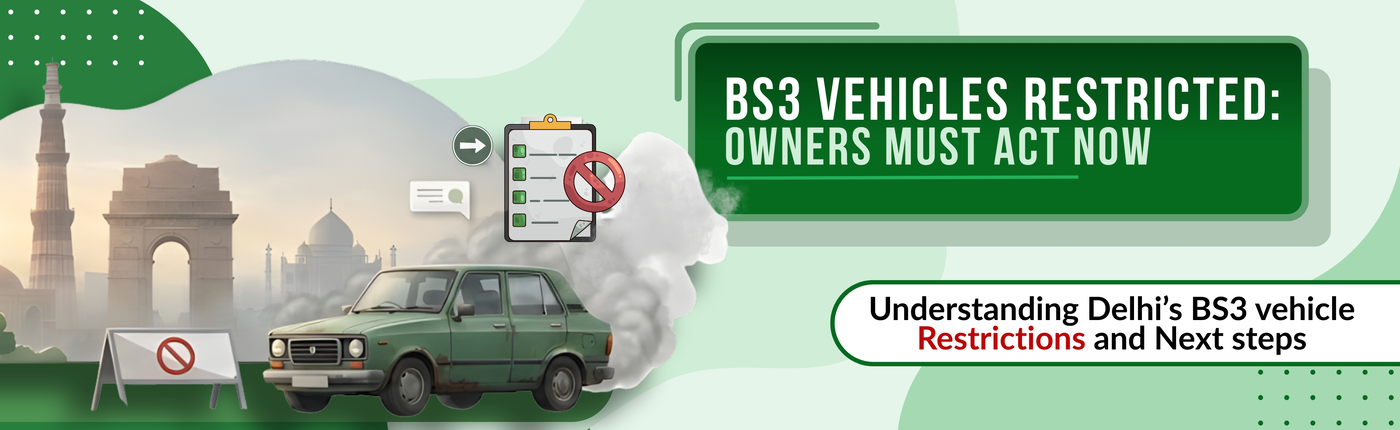
Delhi’s fight against air pollution has led to some of the strictest vehicle regulations in the country. Among the earliest and most impacted categories are BS3 vehicles, which are now largely considered unfit for use in the Delhi NCR region. If you own a BS3 petrol or diesel vehicle, this guide explains the current status, reasons, impact, and clear next steps.
Table of Content
BS3 vehicles emit far higher levels of pollutants compared to newer emission standards.
BS3 vehicles were phased out much earlier than BS4, due to significantly higher emissions.
Key regulatory developments include:
| Feature | BS3 | BS4 | BS6 |
|---|---|---|---|
| Pollution Level | high | Medium | Low |
| Delhi Compliance | Mostly Restricted | Partial | Allowed |
| Fuel Efficiency | Lower | Better | Best |
| Resale Value | Very Low | Moderate | High |
| Future Viability | Poor | Limited |
Cars contribute more to large-scale Metal Recovery due to size and component complexity. However, two-wheelers also add significant recyclable material in high-volume markets like India
If your BS3 vehicle is over the age limit, it is effectively non-compliant.
BS3 vehicles, especially diesel, are now seen as incompatible with Delhi’s clean air goals.
If you own a BS3 vehicle in Delhi NCR, here are your realistic and legal options:
check:
If your BS3 vehicle is over the age limit, it is effectively non-compliant.
For most BS3 vehicles, scrapping is the safest and most practical option
When Scrapping:
Registered Vehicle scraping facilities such as Mariinox often help vehicle owners by coordinating pickup, documentation, and RVSF processing especially helpful for owners unfamiliar with scrapping regulations.
This is only feasible if:
For most BS3 vehicles, this option is rarely cost-effective.
Scrapping a BS3 vehicle can help you:
Get a free, no-obligation quote and see how much your old vehicle is really worth - without the stress of selling.
BS3 vehicles represent an earlier generation of emission standards that are no longer compatible with Delhi’s air quality goals. If you still own a BS3 petrol or diesel vehicle in Delhi NCR, acting early by scrapping it responsibly is far better than waiting for penalties or seizure. Contact a car scrap dealers in Delhi now.
Using authorized car scrap channels and seeking structured assistance from facilitators like Mariinox helps ensure the following:
Ignoring the issue is no longer a viable option.
In most cases, no, especially for diesel vehicles and petrol vehicles beyond age limits.
No. Delhi NCR rules prioritize emission standards and age restrictions.
If the vehicle is non-compliant or age-barred, scrapping becomes the only legal option.
Yes. Pollution control remains a top priority for Delhi authorities.
Yes, BS3 vehicles can still be transferred to another owner in many parts of India, provided the vehicle is legally registered and within the permitted age limit in that state. However, transfers may not be allowed in regions like Delhi NCR where strict pollution and age-based restrictions apply. Owners should always check local RTO rules before transferring a BS3 vehicle.
The future of BS3 vehicles in India is limited as the country continues moving toward stricter emission standards like BS6. Many BS3 vehicles are already old and may fall under End-of-Life Vehicle (ELV) rules due to age and pollution concerns. In major cities such as Delhi, they face restrictions or penalties, and in many cases, responsible scrapping is becoming the most practical option.
Yes, you may still be able to sell an existing BS3 vehicle after 1st April, as the restriction mainly applied to the sale and registration of new BS3 vehicles by manufacturers and dealers. However, resale depends on local regulations, vehicle age, and emission compliance. In stricter regions like Delhi NCR, older BS3 vehicles often have very limited resale value and may need to be scrapped.
You can identify whether a vehicle is BS3 or BS4 compliant by checking its Registration Certificate (RC), where the emission standard is usually mentioned. Another way is to look at the vehicle’s manufacturing year-BS4 standards became mandatory for new vehicles sold in India after April 2017. You can also confirm the emission norm by entering the vehicle number on the government’s Parivahan Sewa Portal.
Yes, BS3 vehicles may operate during non-GRAP days if no temporary pollution-control restrictions are active. However, vehicle age rules and local government regulations in Delhi NCR may still apply, especially for older diesel and petrol vehicles.
Table of Content Why proper RC closure is more important than many veh...
Table of Content Why Car Scrap Value Is Not the Same for Every Vehicle...
Our vehicle disposal experts are here to help you make the right decision.
Get the best value, legal protection, and environmental peace of mind
Don’t risk illegal scrapping! Only authorized facilities like ours can provide official certificates and legal protection.